| Brand Name: | SMT |
| MOQ: | 1 Piece |
| Price: | Negotiable |
| Delivery Time: | 3–7 Working Days |
| Payment Terms: | T/T |
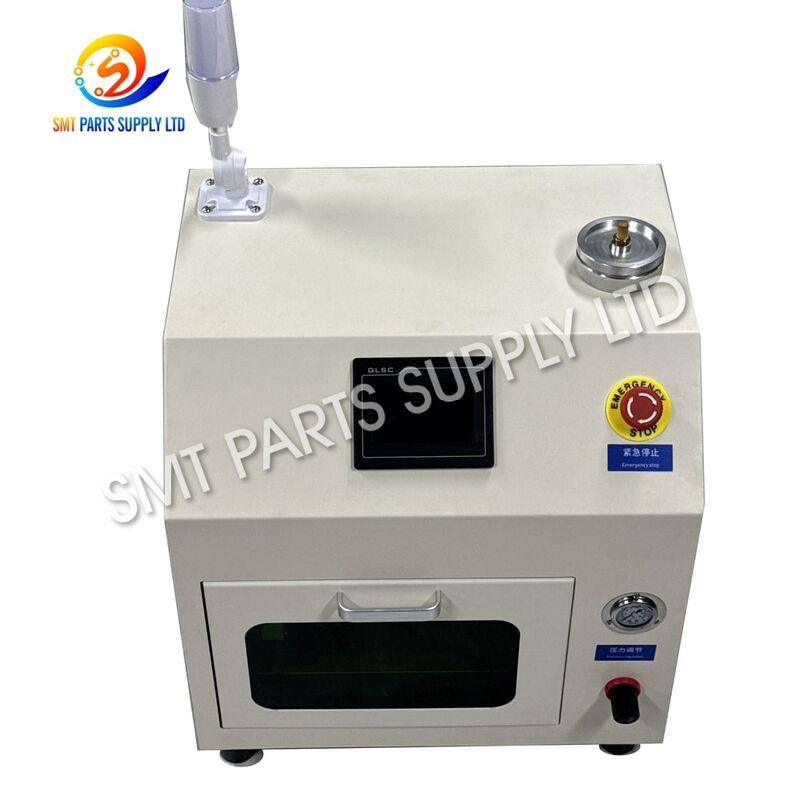
SMT Automatic Nozzle Cleaning Machine for Pick-and-Place Maintenance
![]()
The SMT Automatic Nozzle Cleaning Machine is professional maintenance equipment developed for cleaning precision suction nozzles used in SMT pick-and-place machines. During continuous production, nozzle tips and internal vacuum passages can gradually collect component dust, flux residue, solder paste particles, adhesive contamination and other fine debris. These contaminants may restrict airflow and contribute to unstable component pickup, increased pickup retries or reduced production efficiency.
The machine uses a controlled cleaning process to reach both the nozzle surface and narrow internal suction passages. After cleaning, compressed air helps remove residual moisture and prepares the nozzles for inspection or reuse.
Compared with repeated manual wiping or inserting cleaning needles into small nozzle openings, automatic batch cleaning provides a more consistent and efficient maintenance method. Different nozzle sizes can be supported through suitable nozzle holders or customized fixtures, making the equipment suitable for SMT factories, EMS manufacturers and equipment maintenance departments.
Pick-and-place nozzles operate continuously under vacuum while repeatedly picking and placing electronic components. Even in a controlled SMT production environment, microscopic particles can gradually accumulate inside or around the nozzle.
Typical contamination sources include:
| Contamination Source | Possible Effect |
|---|---|
| Component dust | Restricts nozzle vacuum passage |
| Carrier tape particles | Accumulates around nozzle openings |
| PCB dust | Causes internal contamination |
| Flux residue | Creates sticky deposits |
| Solder paste particles | Affects nozzle tip cleanliness |
| Adhesive residue | Causes inconsistent component release |
| Oil or handling contamination | Contaminates external nozzle surfaces |
| Fine production debris | Reduces stable vacuum airflow |
A contaminated nozzle does not always appear visibly dirty. Fine particles inside a narrow suction passage can reduce airflow even when the external surface looks acceptable.
Nozzle contamination may contribute to:
Regular cleaning therefore forms an important part of SMT preventive maintenance.
The SMT nozzle cleaner provides a controlled alternative to repetitive manual cleaning.
Operators place multiple nozzles into the appropriate cleaning fixture and start the selected cleaning cycle. The system directs cleaning flow toward the nozzle openings and internal passages to loosen and remove accumulated contamination.
After the cleaning stage, compressed air removes residual moisture from the nozzle body and suction passage.
The complete process helps standardize nozzle maintenance and reduce dependence on operator technique.
| Feature | Benefit |
|---|---|
| Automatic Cleaning | Reduces repetitive manual work |
| Batch Processing | Cleans multiple nozzles in one cycle |
| Internal Passage Cleaning | Reaches areas difficult to clean manually |
| Air Drying | Removes residual moisture after cleaning |
| Adjustable Process | Adapts to different maintenance requirements |
| Replaceable Fixture | Supports different nozzle sizes |
| Non-Abrasive Cleaning | Reduces unnecessary mechanical contact |
| Repeatable Cycle | Improves maintenance consistency |
Traditional cleaning methods sometimes involve needles, metal wires, brushes or manual air blowing.
These methods can be useful for basic maintenance but may present disadvantages when used incorrectly.
Sharp tools can scratch or deform precision nozzle openings. Manual wiping may clean the outside while leaving contamination inside the vacuum passage. Air blowing alone may also be insufficient for sticky residue.
Automatic cleaning offers a more systematic process for routine nozzle maintenance.
Exact specifications depend on the selected machine configuration and nozzle fixture.
| Parameter | Specification |
|---|---|
| Product Name | SMT Automatic Nozzle Cleaning Machine |
| Equipment Type | SMT Maintenance Equipment |
| Application | Pick-and-Place Nozzle Cleaning |
| Cleaning Method | Controlled Fine Water-Jet Cleaning |
| Cleaning Medium | Purified Water / DI Water |
| Drying Method | Compressed Air Drying |
| Operation | Automatic |
| Nozzle Fixture | Replaceable / Customized |
| Batch Capacity | According to Fixture Configuration |
| Cleaning Time | Adjustable |
| Drying Time | Adjustable |
| Control System | Industrial Control System |
| User Interface | According to Machine Configuration |
| Air Supply | Clean Compressed Air Required |
| Power Supply | Configured for Destination Market |
| Installation | Indoor Industrial Environment |
| Water Collection | Integrated According to Configuration |
| Application Industry | SMT / PCB Assembly |
| Machine Condition | New |
| Customized Fixture | Available |
| Export Packaging | Available |
| Requirement | Recommendation |
|---|---|
| Cleaning Water | Purified or deionized water |
| Compressed Air | Clean and dry |
| Installation Surface | Stable and level |
| Environment | Clean indoor workshop |
| Electrical Supply | Match ordered configuration |
| Fixture | Match nozzle dimensions |
| Routine Maintenance | Tank, filter and fixture inspection |
Clean compressed air is particularly important because contaminated factory air can introduce moisture, oil or particles during the drying process.
The automatic nozzle cleaning machine is suitable for regular maintenance in a wide range of electronics manufacturing environments.
Production lines operating pick-and-place machines can use the cleaner as part of scheduled nozzle maintenance. Nozzles can be cleaned during preventive maintenance, product changeovers or when abnormal pickup performance is detected.
EMS factories often operate multiple machine platforms and process many component sizes. A batch cleaning system helps maintenance teams manage larger nozzle inventories more efficiently.
High-mix manufacturing frequently changes components, feeders and nozzle combinations. Clean spare nozzles help technicians prepare machines faster for the next production program.
Factories running several placement machines continuously may accumulate a large number of nozzles requiring maintenance. Automatic batch processing can reduce the labor required for individual manual cleaning.
Equipment repair and service companies can clean nozzles before inspection, vacuum testing or return to customers.
With a suitable holder or customized fixture, the equipment can support different pick-and-place nozzle structures, including:
Because nozzle dimensions vary considerably, compatibility should be checked before ordering.
For special nozzles, customers are recommended to provide the nozzle part number, machine model, photographs and physical dimensions.
Before cleaning, visually inspect each nozzle.
Nozzles with cracked tips, severe wear, deformation or mechanical damage should be separated. Cleaning removes contamination but cannot repair physical damage.
Install the nozzles into the corresponding fixture.
Correct positioning helps maintain alignment during the cleaning cycle and ensures cleaning flow reaches the required areas.
Before starting, check:
The machine directs controlled cleaning flow toward the nozzle.
The process is designed to reach the nozzle opening and internal vacuum passage, helping dislodge dust and production residue.
After cleaning, compressed air removes remaining water from the nozzle surface and internal passage.
This reduces manual drying work and prepares the nozzle for subsequent inspection.
Remove the cleaned nozzles and inspect them before returning them to production.
Where available, vacuum performance can also be checked.
| Process | Purpose |
|---|---|
| Nozzle Inspection | Identify damaged nozzles |
| Fixture Loading | Secure nozzles correctly |
| Parameter Setting | Select suitable cleaning cycle |
| Water Cleaning | Remove internal and external contamination |
| Air Drying | Remove residual moisture |
| Visual Inspection | Confirm cleaning condition |
| Vacuum Test | Check suction performance if required |
| Production Reuse | Return qualified nozzles to service |
| Item | Manual Cleaning | Automatic Nozzle Cleaning |
|---|---|---|
| Batch Processing | Limited | Yes |
| Cleaning Consistency | Operator Dependent | More Repeatable |
| Internal Passage Access | Limited | Improved |
| Labor Requirement | Higher | Lower |
| Drying | Usually Manual | Automatic |
| Mechanical Contact | Often Required | Reduced |
| Standardization | Difficult | Easier |
| High-Volume Maintenance | Less Efficient | More Suitable |
Automatic cleaning does not eliminate inspection requirements. It provides a more efficient and repeatable cleaning stage within the complete maintenance process.
Different placement machines use different nozzle designs.
Provide the machine model when requesting a quotation so the nozzle application can be checked.
The nozzle part number is one of the most useful references for confirming fixture compatibility.
If the part number is unavailable, clear photographs and dimensions should be supplied.
For customized fixtures, useful dimensions include:
| Dimension | Why It Matters |
|---|---|
| Overall Length | Confirms fixture depth |
| Body Diameter | Determines holder size |
| Tip Diameter | Helps verify nozzle structure |
| Mounting Diameter | Determines installation position |
| Suction Hole Size | Helps assess cleaning requirement |
| Special Shape | Determines customized fixture needs |
Consider how many nozzles are normally cleaned at one time.
A maintenance department processing large quantities should select a configuration that supports efficient batch cleaning.
Factories with only occasional maintenance may prefer a more compact configuration.
If one factory uses several pick-and-place platforms, a machine with interchangeable or customized fixtures can provide greater flexibility.
This allows one cleaner to support several nozzle families instead of restricting the equipment to one specific nozzle format.
Before ordering, confirm:
Supplying this information during quotation helps ensure the machine configuration matches the destination factory.
Do not select the machine only according to current nozzle volume.
If the production line is expanding, selecting a flexible fixture system can provide additional capacity for future nozzle maintenance.
For stable machine performance:
A standardized maintenance record can help identify nozzles that repeatedly cause pickup problems and may require replacement rather than further cleaning.
Yes. The cleaner can be configured for different pick-and-place nozzle dimensions by using suitable or customized fixtures. Please provide the machine model, nozzle part number and nozzle photographs for compatibility confirmation.
Purified water or deionized water is commonly used for normal nozzle cleaning. The correct cleaning medium should always follow the configuration and maintenance requirements of the selected machine.
Yes. The system is designed for batch cleaning. Actual capacity depends on nozzle size, fixture design and machine configuration. Large or specially shaped nozzles may require different fixture arrangements.
No. Cleaning can remove contamination that restricts the vacuum passage, but it cannot repair cracked, bent, worn or mechanically damaged nozzle tips. Damaged nozzles should be replaced.
Please provide your pick-and-place machine model, nozzle part number, nozzle photos, approximate dimensions, required cleaning quantity, destination country and preferred electrical specification. This information helps us recommend the appropriate configuration.
Need a suitable nozzle cleaning machine for your SMT production line?
Send us your machine model, nozzle part number, nozzle photos and expected cleaning quantity. Our team can help confirm nozzle compatibility, fixture configuration and suitable cleaning capacity according to your maintenance requirements.
We support both standard and customized nozzle fixture solutions for different SMT production environments.
Contact us today for technical details, configuration recommendations, lead time and quotation.