logo
Good price  online

products details

Created with Pixso. Home Created with Pixso. Products Created with Pixso.
SMT Conveyor Belt
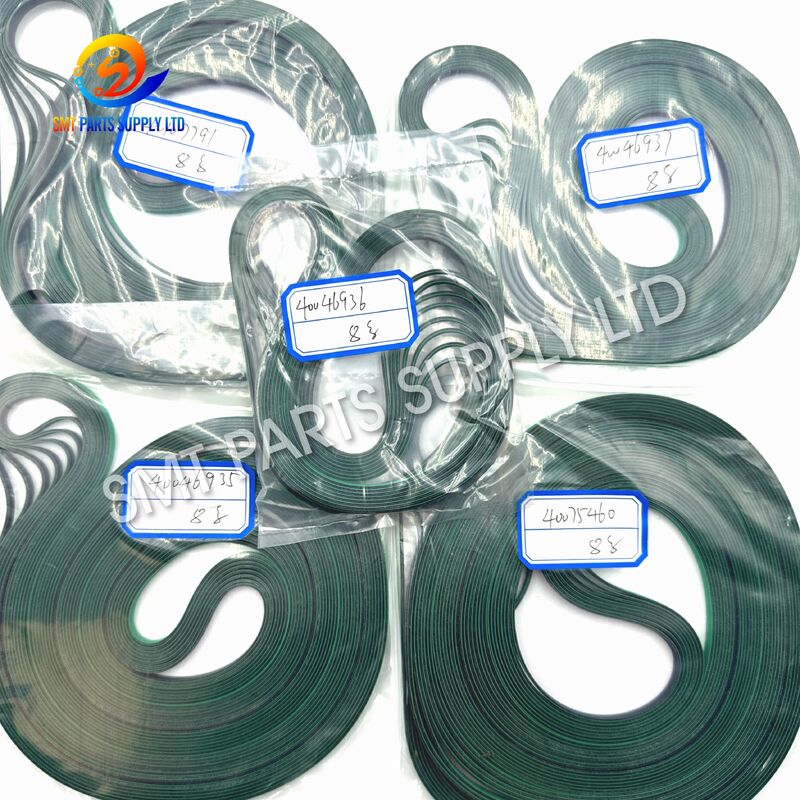
Created with Pixso. JUKI 40107797 40046935 40046936 40046937 40075460 SMT Conveyor Belts

JUKI 40107797 40046935 40046936 40046937 40075460 SMT Conveyor Belts

Brand Name: JUKI
Model Number: 40107797 40046935 40046936 40046937 40075460
Detail Information
Place of Origin:
CHINA&JAPEN
Product Name:
SMT Machine Conveyor Belt
Brand Reference:
JUKI
Product Category:
SMT Conveyor Belt
Part Numbers:
40107797, 40046935, 40046936, 40046937, 40075460
Verified Part Numbers:
40046935, 40046936, 40046937, 40075460
Center Word:
SMT Conveyor Belt
Belt Type:
Flat PCB Transfer Belt
40046935 Description:
Conveyor Belt S
40046936 Description:
Conveyor Belt J
40046937 Description:
In/Out Conveyor Belt
40075460 Description:
Conveyor Belt S(E)250 / S(E)350
40107797 Description:
Part Number Requires Confirmation
Applicable Equipment:
SMT Pick-and-Place Machine
Typical Machine Models:
FX-3, FX-3RA, JX-300, JX-350, Configuration Dependent
Highlight:

JUKI SMT conveyor belts

,

SMT conveyor belts with warranty

,

JUKI 40046935 conveyor belts

Product Description

JUKI 40107797 40046935 40046936 40046937 40075460 SMT Conveyor Belts

JUKI 40107797 40046935 40046936 40046937 40075460 SMT Conveyor BeltsJUKI 40107797 40046935 40046936 40046937 40075460 SMT Conveyor BeltsJUKI 40107797 40046935 40046936 40046937 40075460 SMT Conveyor Belts

JUKI 40107797, 40046935, 40046936, 40046937, and 40075460 SMT conveyor belts are designed for PCB transfer sections in compatible surface-mount placement equipment. These belts support stable board loading, internal transport, positioning, and unloading during continuous SMT production.

The product group includes different belt positions and configurations rather than one universal belt. Verified references include 40046935 Conveyor Belt S, 40046936 Conveyor Belt J, 40046937 In/Out Conveyor Belt, and 40075460 Conveyor Belt S(E). The first three references are commonly associated with FX-3 and FX-3RA conveyor assemblies, while 40075460 is commonly listed as an S(E)250 or S(E)350 conveyor belt for selected JX and related machine configurations. Compatibility must always be confirmed using the machine model, rail specification, original belt label, belt dimensions, and installation position.

These replacement belts are suitable for preventive maintenance, emergency repairs, production-line rebuilding, and spare-parts inventory. Send us your machine model, original part number, belt photo, and dimensions for faster identification and quotation.


Product Identification Table
Part Number Standard Part Description Typical Belt Position Common Application Reference Verification Status
40046935 Conveyor Belt S Main or S conveyor section FX-3 / FX-3RA Publicly cross-referenced
40046936 Conveyor Belt J J conveyor section FX-3 / FX-3RA Publicly cross-referenced
40046937 In/Out Conveyor Belt PCB input or output section FX-3 / FX-3RA Publicly cross-referenced
40075460 Conveyor Belt S(E)250 / S(E)350 S(E) conveyor section Selected JX and related configurations Confirm machine configuration
40107797 Customer-provided reference To be confirmed To be confirmed Verify before ordering

Public spare-parts lists identify 40046935 as Conveyor Belt S, 40046936 as Conveyor Belt J, and 40046937 as the In/Out Conveyor Belt for FX-3 or FX-3RA equipment. Public catalogs also identify 40075460 as Conveyor Belt S(E)250 or S(E)350.


Cause: Why SMT Conveyor Belts Require Replacement

SMT conveyor belts operate continuously under repeated loading, tension, friction, and temperature changes. Although the belt may appear simple, its condition directly affects PCB transfer stability and machine availability.

1. Surface Wear

The belt surface gradually becomes smooth, polished, cracked, or locally damaged. Reduced friction can cause the PCB to slip during loading or unloading.

2. Belt Elongation

Long operating hours may cause the belt to stretch. An elongated belt can lose correct tension and may move unevenly around the drive and guide pulleys.

3. Edge Fraying

Incorrect tracking, damaged pulleys, excessive tension, or misaligned rails can wear the belt edges. Frayed material may create particles or interfere with nearby mechanisms.

4. Oil, Dust, and Flux Contamination

Dust, lubricant, adhesive residue, and production contamination can reduce belt grip. Contamination may also increase uneven wear between the left and right conveyor rails.

5. Incorrect Tension

A belt that is too loose may slip or jump. A belt that is too tight can overload bearings, pulleys, shafts, or conveyor motors.

6. Pulley or Rail Misalignment

Installing a new belt without checking the pulley path may cause premature belt failure. Misalignment can force the belt toward one side and damage the belt edge.

7. Wrong Replacement Specification

Belts with similar color and appearance may have different length, width, thickness, surface texture, joint structure, or application position. Selecting only by appearance can result in installation failure.


Common Conveyor Problems and Possible Causes
Production Symptom Possible Belt-Related Cause Recommended Check
PCB stops during transfer Belt slipping or insufficient tension Inspect tension and surface grip
Board moves unevenly Left and right belts running differently Compare belt condition and pulley alignment
PCB enters at an angle Unequal tension or contaminated belt Clean and synchronize both sides
Conveyor alarm occurs repeatedly Belt resistance or incorrect routing Inspect routing, pulleys, and sensors
Belt moves sideways Pulley or rail misalignment Correct tracking before operation
Belt edge becomes damaged Excessive tension or contact with rail Check clearance and installation position
Motor becomes unusually hot Belt tension may be excessive Reduce tension and inspect bearings
Unstable PCB positioning Worn or stretched conveyor belt Compare dimensions with a new belt
Increased particles inside machine Belt edge fraying or surface deterioration Replace belt and clean conveyor section
New belt cannot be installed Incorrect part number or size Reconfirm model, position, and dimensions

Solution: Stable Replacement for PCB Conveyor Maintenance

The correct replacement solution begins with accurate identification. Each belt should match the original part number, machine configuration, conveyor position, and physical dimensions.

Our supply process can support the following identification methods:

Identification Method Information Required Recommended Accuracy
Original part number Clear label or parts-list reference High
Machine model Complete machine name and configuration Medium to high
Installation position Input, output, main, S, J, or S(E) section High
Belt dimensions Circumference, width, and thickness High
Original sample photo Front, rear, edge, and joint photographs High
Machine serial number Serial plate or production configuration Useful for special versions
Old and new comparison Side-by-side dimensional comparison Very high

For 40046935, 40046936, and 40046937, the standard part descriptions and FX-3/FX-3RA association are documented in public spare-parts catalogs. For 40075460, listings may describe the belt as S(E)250 or S(E)350, so the conveyor width and machine configuration should be stated in the inquiry.

For 40107797, please send a photograph of the original label. Public listings more commonly identify the JX conveyor belt group as 40107791, 40107792, and 40107793 for JX-200 and JX-300 machines.


Key Product Benefits
Feature Customer Benefit
Application-specific belt references Reduces the risk of selecting a visually similar but incorrect belt
Stable PCB contact surface Supports consistent board transfer through the conveyor section
Controlled flexibility Helps the belt follow the pulley path smoothly
Accurate dimensional matching Supports easier installation and correct tracking
Multiple belt-position options Covers input, output, main, S, J, and S(E) conveyor requirements
Maintenance-friendly supply Suitable for scheduled replacement and emergency spare inventory
Individual part-number selection Customers can purchase only the required conveyor position
Sample-based identification Useful when the original part number is unclear
Export packing options Helps protect belt shape and surface during transportation
Technical confirmation before shipment Reduces installation errors and unnecessary downtime

Specifications
General Specification Table
Specification Item Product Information
Product Category SMT Conveyor Belt
Equipment Type Surface-Mount Placement Machine
Primary Function PCB loading, transfer, positioning, and unloading
Brand Identification JUKI
Listed Part Numbers 40107797, 40046935, 40046936, 40046937, 40075460
Verified Standard References 40046935, 40046936, 40046937, 40075460
Belt Types Conveyor Belt S, Conveyor Belt J, In/Out Belt, Conveyor Belt S(E)
Typical Machine References FX-3, FX-3RA, JX-300, JX-350, and configuration-dependent models
Installation Area Conveyor rail or PCB transfer section
Operating Method Driven by conveyor pulley and motor assembly
Product Form Endless or joined flat conveyor belt, depending on reference
Surface Characteristics Friction surface suitable for PCB edge transport
Color Commonly green; actual appearance depends on part number and production batch
Width Part-number dependent
Circumference Part-number dependent
Thickness Part-number dependent
Direction Confirm according to installation layout
Condition Options Original new or compatible new, subject to quotation
Minimum Order Quantity Available from one piece, subject to stock confirmation
Packaging Protective bag and export carton
Inspection Part number, appearance, dimensions, and quantity checked before dispatch
Compatibility Confirmation Required before order placement
Part Number Specification Table
Part Number Belt Name Position or Function Recommended Inquiry Information
40046935 Conveyor Belt S S conveyor section FX-3/FX-3RA model, belt photo, quantity
40046936 Conveyor Belt J J conveyor section FX-3/FX-3RA model, installation photo
40046937 In/Out Conveyor Belt PCB input/output transfer Machine model, left/right position, dimensions
40075460 Conveyor Belt S(E)250/S(E)350 Width-dependent conveyor section Machine model, 250/350 configuration, old belt photo
40107797 Reference requiring verification Unconfirmed Original label, model, dimensions, installation position
Important Specification Notice

The same machine family may use different belts according to conveyor width, rail position, production version, and mechanical configuration. Dimensions should not be copied from another belt only because the color or appearance is similar.

For accurate quotation, please provide:

  1. Complete machine model.
  2. Machine serial number when available.
  3. Original belt part number.
  4. Belt installation position.
  5. Belt width.
  6. Belt thickness.
  7. Belt circumference.
  8. Clear photographs of both sides.
  9. Photograph of the belt joint.
  10. Required quantity and preferred condition.

Application

These SMT conveyor belts are used in PCB transport assemblies where stable, synchronized movement is required.

Typical Application Areas
Application Area Belt Function
PCB loading section Receives the circuit board from upstream equipment
Machine input conveyor Transfers the PCB into the placement area
Internal conveyor section Moves the PCB toward the working position
PCB positioning stage Supports stable movement before board clamping
Machine output conveyor Transfers the completed PCB to downstream equipment
Width-adjustable conveyor Works with rail configurations for different PCB sizes
Preventive maintenance Replaces aged belts before an unexpected stoppage
Machine refurbishment Restores conveyor performance during equipment rebuilding
Emergency spare inventory Reduces waiting time after sudden belt damage
SMT line maintenance Supports continuous production and faster repair response
Suitable Production Environments
  • Electronics manufacturing service factories.
  • PCB assembly plants.
  • Consumer electronics production lines.
  • Automotive electronics assembly.
  • Industrial control PCB manufacturing.
  • LED and lighting electronics production.
  • Communication equipment assembly.
  • Medical electronics manufacturing.
  • SMT machine refurbishment workshops.
  • Spare-parts distributors and maintenance providers.

JUKI 40107797 40046935 40046936 40046937 40075460 SMT Conveyor BeltsJUKI 40107797 40046935 40046936 40046937 40075460 SMT Conveyor BeltsJUKI 40107797 40046935 40046936 40046937 40075460 SMT Conveyor Belts
How It Works

The conveyor motor transfers rotational force to the drive pulley. The pulley moves the belt along the conveyor rail, and the friction surface of the belt carries the PCB by its edges.

The complete operating sequence generally includes the following stages:

Working Stage Belt Operation
Board arrival The belt receives the PCB from upstream equipment
Sensor detection A conveyor sensor confirms board presence
Controlled movement The belt transports the PCB into the machine
Positioning The belt slows or stops at the programmed position
Clamping or support The machine secures the PCB for component placement
Processing The conveyor remains stationary during placement
Release The clamp or support mechanism releases the PCB
Board exit The belt sends the PCB to the downstream machine
Cycle restart The conveyor prepares to receive the next PCB

Stable operation depends on more than the belt alone. The following components should be checked during replacement:

  • Drive pulley.
  • Idler pulley.
  • Conveyor motor.
  • Bearings.
  • Guide wheels.
  • Rail alignment.
  • Tensioning mechanism.
  • PCB sensors.
  • Stopper mechanism.
  • Left and right conveyor synchronization.

A high-quality replacement belt may still wear quickly when a pulley is damaged or the rail is misaligned. Inspecting the complete conveyor path helps extend service life.


How to Choose the Correct Conveyor Belt
Step 1: Check the Original Part Number

Use the number printed on the belt packaging, machine parts list, maintenance record, or original label.

Do not rely only on the machine name. One machine may use several conveyor belts in different positions.

Step 2: Identify the Installation Position

Confirm whether the belt is installed in the:

  • Input conveyor.
  • Output conveyor.
  • Main conveyor.
  • S conveyor section.
  • J conveyor section.
  • S(E)250 section.
  • S(E)350 section.
  • Left rail.
  • Right rail.
  • Internal transfer module.
Step 3: Confirm the Machine Model

For example, 40046935, 40046936, and 40046937 are publicly associated with FX-3 and FX-3RA conveyor assemblies. The 40075460 reference is commonly described as an S(E)250 or S(E)350 conveyor belt, with application varying by machine configuration.

Step 4: Measure the Original Belt

Measure the belt without excessive stretching.

Measurement How to Confirm
Circumference Measure the complete closed-loop length
Width Measure across the belt surface
Thickness Use a suitable measuring tool
Joint type Photograph the connecting area
Surface pattern Compare texture and friction layer
Edge shape Check straight, beveled, or special profile
Color Use only as supporting information
Step 5: Compare the Belt Structure

Check whether the belt has:

  • A smooth or textured surface.
  • Reinforced fabric layers.
  • A visible joint.
  • A directional surface.
  • A special edge profile.
  • Printing or identification marks.
  • Different inner and outer surfaces.
Step 6: Verify 40107797 Before Uploading or Ordering

Reliable public listings for JX-series belts commonly show 40107791, 40107792, and 40107793. Therefore, 40107797 should not be assigned a machine model or belt position without an original label or physical confirmation.

Step 7: Send Complete Inquiry Information

A complete inquiry helps us quote faster and reduce selection errors.

Recommended inquiry format:

  • Machine model:
  • Machine serial number:
  • Required part number:
  • Belt position:
  • Conveyor width:
  • Belt dimensions:
  • Original or compatible condition:
  • Required quantity:
  • Delivery country:
  • Product photographs attached: Yes/No

Selection Comparison Table
Customer Situation Recommended Action
Part number is clearly visible Order according to the verified reference
Part number is unclear Send belt and installation photographs
Machine has been modified Confirm dimensions instead of relying only on model
Belt is broken into pieces Measure pulley path and provide old belt sections
Customer needs 40075460 Confirm S(E)250 or S(E)350 configuration
Customer requests 40107797 Verify whether the intended number is 40107791
Left and right belts wear differently Inspect alignment and consider replacing both
Machine is in continuous production Keep one additional set as emergency stock
Original belt is unavailable Provide sample dimensions for compatible selection
Conveyor motor is overloaded Inspect belt tension, pulley resistance, and bearings

Installation Guidance
Before Installation
  1. Switch off and isolate the machine power.
  2. Record the original belt routing.
  3. Photograph the pulley and tensioner positions.
  4. Check the new belt part number.
  5. Compare the new and old belt dimensions.
  6. Clean the pulley surfaces.
  7. Inspect bearings and guide wheels.
  8. Remove foreign material from the rail.
  9. Check whether the two conveyor sides require matched replacement.
  10. Prepare the correct tools according to the maintenance manual.
During Installation
  • Avoid twisting or sharply folding the belt.
  • Keep the running surface clean.
  • Install the belt according to the original path.
  • Confirm that the belt is centered on every pulley.
  • Apply balanced tension.
  • Rotate the conveyor manually before powering the machine.
  • Check that the belt does not contact the rail edge.
  • Confirm that sensors and cables remain in their original positions.
After Installation
Inspection Item Acceptance Requirement
Belt tracking Belt remains centered during operation
Belt tension No slipping and no excessive tightness
Pulley rotation Smooth movement without abnormal resistance
PCB transfer Board moves straight and consistently
Left/right synchronization Both sides move at equal speed
Noise No scraping, knocking, or abnormal friction
Motor temperature No unusual increase after trial operation
Sensor operation Board arrival and exit signals work correctly
Belt surface No contamination or installation damage
Final test Several PCBs pass through without alarms

Installation should be completed by trained maintenance personnel according to the machine manufacturer’s safety procedures.


Quality Inspection

Each shipment can be checked according to the confirmed purchase specification.

Inspection Process
Inspection Stage Checking Content
Part-number verification Confirms the ordered belt reference
Appearance inspection Checks edges, surface, joint, and visible damage
Dimensional inspection Confirms width and other agreed dimensions
Quantity inspection Confirms the ordered number of pieces
Packaging inspection Protects the belt from crushing or contamination
Label inspection Ensures clear item identification
Pre-shipment confirmation Photos can be supplied when requested
Recommended Customer Acceptance Check

After receiving the goods, compare:

  • Package label.
  • Part number.
  • Belt width.
  • Belt circumference.
  • Belt surface.
  • Joint position.
  • Installation direction.
  • Ordered quantity.
  • Physical condition.
  • Compatibility with the removed belt.

Do not install the belt when the part number or dimensions differ from the original sample. Contact the supplier first for confirmation.


Packaging and Storage
Packaging

Belts should be packed without severe folding or compression. Individual protective packaging helps prevent contamination, deformation, and surface damage during international transportation.

Packaging Item Standard Purpose
Individual protective bag Keeps the belt clean
Identification label Shows part number and quantity
Inner protection Prevents sharp bending
Export carton Protects goods during transportation
Quantity list Simplifies receiving inspection
Storage Recommendations
  • Store in a clean and dry environment.
  • Avoid direct sunlight.
  • Keep away from high-temperature equipment.
  • Prevent contact with oil and aggressive chemicals.
  • Do not place heavy objects on the belt.
  • Avoid sharply folding the belt.
  • Keep the original identification label.
  • Use older inventory first.
  • Inspect stored belts before installation.
  • Maintain a record of part number and machine application.

Why Source These Conveyor Belts from Us
Supply Advantage Value for the Buyer
SMT spare-parts experience Faster communication about machine and belt positions
Multiple part numbers available Convenient sourcing for different conveyor sections
Original and compatible options Supports different maintenance budgets
Sample-based identification Helps buyers with damaged or unclear labels
Small-quantity support Suitable for maintenance and emergency orders
Pre-shipment checking Reduces avoidable part-number mistakes
International packing Suitable for air courier and export transportation
Combined shipment service Allows belts to ship with other SMT spare parts
Technical inquiry checklist Improves compatibility confirmation
Responsive quotation process Helps reduce maintenance waiting time

Frequently Asked Questions
Q1: Are 40046935, 40046936, and 40046937 the same conveyor belt?

No. They are different belt references used in different conveyor positions. Public parts lists identify 40046935 as Conveyor Belt S, 40046936 as Conveyor Belt J, and 40046937 as the In/Out Conveyor Belt for FX-3 and FX-3RA equipment.

Q2: What is the application of JUKI 40075460?

The 40075460 is commonly identified as Conveyor Belt S(E)250 or S(E)350. Public listings associate it with selected JX-300/JX-350 and related machine configurations. Please confirm conveyor width, machine model, and original belt before ordering.

Q3: Is 40107797 a confirmed JUKI conveyor belt part number?

It is not confirmed by the reliable public cross-references reviewed for this product page. Commonly listed JX-series belt numbers are 40107791, 40107792, and 40107793. Please send the original label or confirm whether 40107797 is a typing error.

Q4: What information should I provide for an accurate quotation?

Please provide the machine model, original part number, belt position, width, circumference, thickness, required quantity, and clear photos of the old belt. For 40075460, also specify whether the conveyor configuration is S(E)250 or S(E)350.

Q5: Can you supply both original and compatible conveyor belts?

Supply condition can be quoted according to availability and customer requirements. Please state whether you require original new or compatible new parts. All compatibility details should be confirmed before payment and shipment.


Contact Us

Need help identifying the correct SMT conveyor belt?

Send us the following information for a fast quotation:

  • Required part number.
  • Machine model.
  • Conveyor position.
  • Belt dimensions.
  • Original belt photos.
  • Required quantity.
  • Destination country.

Contact us for JUKI 40046935, 40046936, 40046937, 40075460, and other SMT conveyor belt inquiries. For reference 40107797, please attach the original label or machine information so that the correct belt can be verified before quotation.

Trademark Notice: JUKI model names and part numbers are used only to identify compatibility. The seller is an independent SMT spare-parts supplier unless otherwise stated in the quotation.